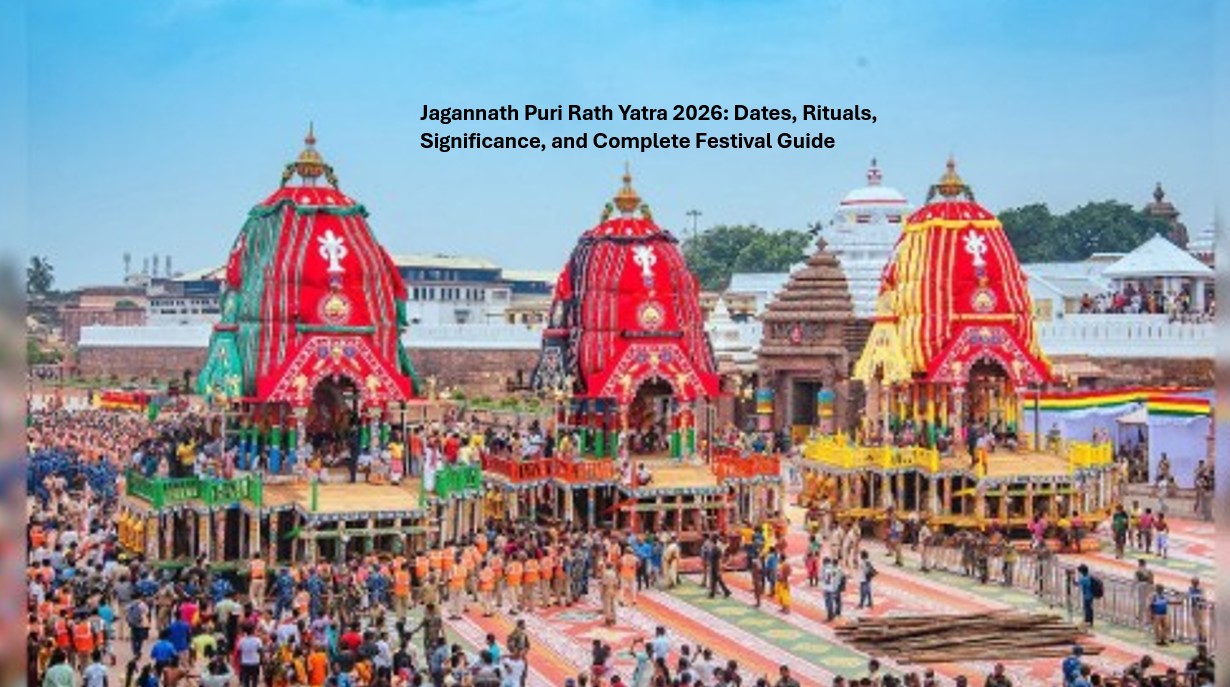
Jagannath Rath Yatra 2026 will be celebrated on Thursday, July 16, 2026, with the sacred nine-day festival culminating in the Bahuda Yatra (Return Journey) on Friday, July 24, 2026. Held annually in the coastal city of Puri, Odisha, this iconic festival witnesses millions of devotees gathering to pull the three magnificent wooden chariots of Lord Jagannath, Lord Balabhadra, and Goddess Subhadra along the 3-kilometre Grand Road (Bada Danda).
Puri Rath Yatra – Significance of the Festival (Mypuritour Holidays)
Recognized as one of the world’s largest and most revered spiritual processions, the Rath Yatra symbolizes devotion, unity, and the Lord’s journey to bless all devotees. Whether you’re planning to experience the celebrations in Puri, observe the festival at home, or learn about its spiritual significance and traditions, here’s everything you need to know. The Full Ritual Calendar Around Rath Yatra 2026
Jagannath Puri Rath Yatra Timeline: Key Rituals and Sacred Events
While the Jagannath Puri Rath Yatra is globally recognized for its magnificent chariot procession, the celebration is much more than a single day of festivities. It is a sacred sequence of rituals spanning several weeks, with each ceremony carrying deep spiritual significance.

Grand Celebration of Puri Rath Yatra (Travelplaces)
Here’s a complete timeline of the Jagannath Rath Yatra celebrations.
-
Snana Purnima (Devasnana Purnima) – June 15
The Rath Yatra festival officially begins with Snana Purnima, when Lord Jagannath, Lord Balabhadra, and Goddess Subhadra are ceremonially bathed using 108 pots of sacred water drawn from the temple well. This elaborate ritual symbolizes purification and marks the start of the annual festival.
-
Anasara – June 16 to July 5
Following the ceremonial bath, the deities are believed to fall ill due to the extensive bathing ritual. During this period, known as Anasara, the temple remains closed for public darshan while skilled artisans restore and repaint the wooden idols in seclusion. Devotees visiting Jagannath Temple, Puri during this time cannot have darshan.
-
Netrotsava – July 14
The sacred Netrotsava ritual marks the completion of the restoration process. The deities’ eyes are ceremonially painted, symbolizing renewed life, and devotees receive the first public darshan before the grand Jagannath Puri Rath Yatra begins.
-
Jagannath Puri Rath Yatra – July 16
The highlight of the festival, Rath Yatra, sees the three deities travel from the Jagannath Temple to the Gundicha Temple aboard their majestic wooden chariots. Millions of devotees gather along the Bada Danda (Grand Road) to pull the chariots and seek divine blessings.
-
Hera Panchami – July 21
On the fifth day of the festival, Goddess Lakshmi visits the Gundicha Temple in search of Lord Jagannath, symbolizing the divine bond between the deities. The ritual is accompanied by a traditional procession and temple ceremonies.
- Bahuda Yatra (Return Journey) – July 24
The sacred Bahuda Yatra marks the return of Lord Jagannath, Lord Balabhadra, and Goddess Subhadra from the Gundicha Temple to the Jagannath Temple, completing the return leg of the annual chariot procession.
-
Suna Besha – July 25
One of the most spectacular rituals of the Jagannath Rath Yatra festival, Suna Besha sees the deities adorned with magnificent gold ornaments while seated on their chariots. Thousands of devotees gather to witness this breathtaking display of devotion and grandeur.
-
Niladri Bije – Around July 27
The festival concludes with Niladri Bije, when the deities ceremonially re-enter the sanctum of the Jagannath Temple. This final ritual marks the completion of the annual Rath Yatra festival, bringing the sacred celebration to a close until the following year.
Three Sacred Chariots of Rath Yatra: Symbolism, Names, and Unique Features
One of the most remarkable traditions of the Jagannath Puri Rath Yatra is the construction of three magnificent wooden chariots, each dedicated to one of the presiding deities. Unlike most ceremonial structures, these chariots are built from scratch every year using specially selected timber sourced from designated forests in Odisha.
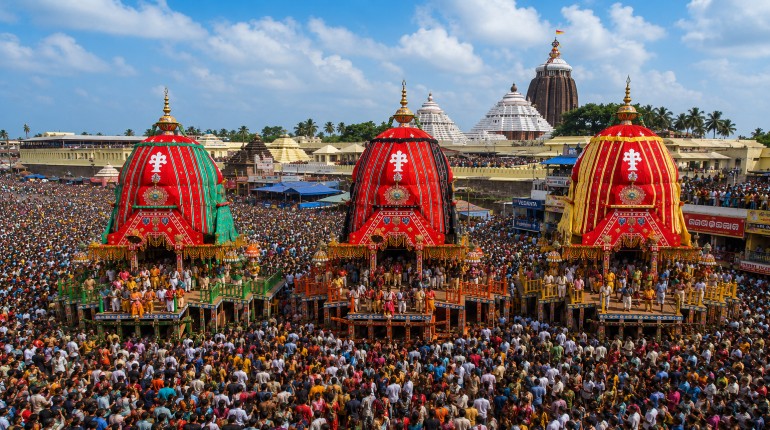
The Spiritual Legacy of the Jagannath Puri Rath Yatra (Ixigo)
The responsibility of building the chariots rests with the Maharanas, hereditary temple carpenters who follow age-old measurements, rituals, and construction techniques that have been preserved for generations. Although new chariots are made annually, their design, dimensions, and sacred traditions remain unchanged.
Nandighosha – Chariot of Lord Jagannath
- Nandighosha – Chariot of Lod Jagannath: The grandest of the three, Nandighosha stands approximately 45 feet tall and is supported by 16 wheels. Decorated with striking red and yellow canopies, the chariot features Garuda on its crest and is drawn by four white wooden horses. It is the most iconic chariot of the Rath Yatra and attracts the largest gathering of devotees.
- Taladhwaja – Chariot of Lord Balabhadra: The chariot of Lord Balabhadra, known as Taladhwaja, rises to about 44 feet and has 14 wheels. It is adorned with red and green canopies, while a palm tree emblem on its flag distinguishes it from the other two chariots.
- Darpadalana (Devadalana) – Chariot of Goddess Subhadra: Goddess Subhadra travels in Darpadalana, also known as Devadalana. Standing around 43 feet tall with 12 wheels, the chariot is decorated with red and black canopies and bears a lotus emblem, symbolizing purity and divine grace.
Why New Chariots Are Built Every Year

Celebration of Faith, Tradition, and Unity with Jagannath Puri Rath Yatra (Hindu Blog)
A unique aspect of the Jagannath Rath Yatra is that the chariots are not reused. Once the festival concludes, the sacred timber is respectfully distributed as prasad, and preparations for the next year’s chariots begin on Akshaya Tritiya. This centuries-old tradition reflects the festival’s emphasis on renewal, devotion, and continuity, ensuring that every Rath Yatra begins with newly crafted chariots built according to the same sacred customs.
The Timeless Legacy of Jagannath Puri Rath Yatra
The annual construction of the three sacred chariots is one of the most cherished traditions of the Jagannath Puri Rath Yatra, reflecting centuries of devotion, craftsmanship, and spiritual heritage. As millions gather to witness this extraordinary festival, these majestic chariots stand as enduring symbols of faith, unity, and the timeless legacy of Lord Jagannath.


Follow me as @SanghamitraRch on Twitter.
A proficient Content Developer, Blogger, and Freelance Content Writer. A happy author of www.w3buzz.in. Known for her passion for learning and continually refining skills, she brings a fresh perspective to her work. A travel enthusiast, photographer, and sports lover, she combines creativity and curiosity in all her projects.
Follow me as @SanghamitraRch on Twitter.
Leave a Reply